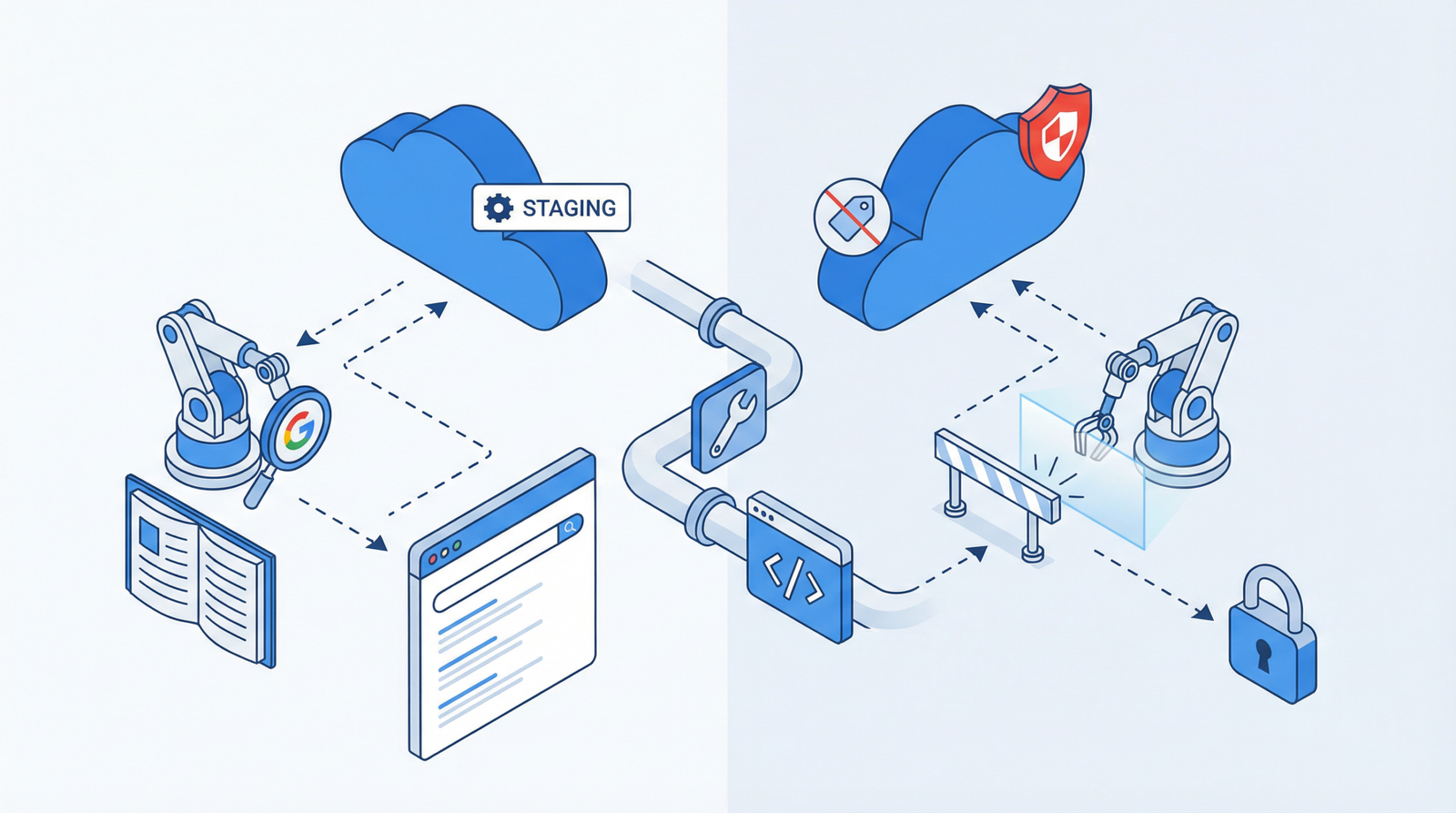
The Silent SEO Killer: How to Conquer www vs. Non-www Duplicate Content
Is your website fighting itself for SEO glory? In the complex world of search engine optimization, seemingly minor details can have a significant impact. One such detail is how your website handles its ‘www’ and ‘non-www’ versions. If both www.yourdomain.com and yourdomain.com are accessible, you’re likely facing a classic case of duplicate content – a silent SEO killer that can dilute your authority and hinder your search rankings.
Understanding the www vs. Non-www Dilemma

From a user’s perspective, www.yourdomain.com and yourdomain.com might appear identical. However, to search engines like Google, these are often treated as two distinct entities. When the same content is available at multiple URLs, search engines become confused about which version to crawl, index, and rank. This isn’t just a theoretical problem; it has tangible negative consequences for your website’s performance.
Why Duplicate Content Harms Your SEO
- Diluted Link Equity: When other websites link to your content, some might link to the ‘www’ version, while others link to the ‘non-www’ version. This splits the valuable link equity (or ‘link juice’) between two URLs instead of consolidating it to a single, authoritative source. This dilution weakens your overall SEO authority.
- Confused Crawling and Indexing: Search engine crawlers have a limited ‘crawl budget’ for each site. If they spend time crawling identical content on two different URLs, they might miss other important pages on your site. This inefficiency can lead to slower indexing of new content and a less comprehensive understanding of your website.
- Lower Rankings: When search engines are unsure which version is the ‘canonical’ or preferred one, they may struggle to assign ranking signals effectively. This can result in neither version ranking as highly as it should, or even lead to the wrong version being displayed in search results.
- Poor User Experience: While less common with www vs. non-www, inconsistent URLs can sometimes lead to minor user experience issues or broken internal links if not managed properly.
Are You Affected? How to Diagnose the Problem
Identifying whether your website has a www vs. non-www duplicate content issue is straightforward. Here’s how to check:
-
Manual Browser Test: Open your web browser and type in both versions of your domain:
www.yourdomain.comyourdomain.com
Observe if both URLs resolve to the exact same preferred version (e.g., both redirect tohttps://yourdomain.comorhttps://www.yourdomain.com). If they don’t, you have a problem.
-
Google Search Console (GSC) Inspection:
- If you have both versions added as separate properties in GSC (e.g., a
wwwproperty and anon-wwwproperty), check the indexing status for both. Look for any warnings or errors related to duplicate content or canonicalization. - In modern GSC, domain properties consolidate data, but you can still check URL Inspection for specific URLs.
- If you have both versions added as separate properties in GSC (e.g., a
-
Site Search Operators: Use Google’s
site:operator to see how many pages are indexed for each version:- Search for
site:www.yourdomain.com - Search for
site:yourdomain.com
If you see a significant number of results for both, it indicates that Google is indexing both versions, which is undesirable.
- Search for
-
Canonical Tags and Redirects Verification:
- Canonical Tags: View the source code of your pages (right-click -> “View Page Source” or “Inspect”) and search for
<link rel="canonical" href="...">. Ensure the URL specified in thehrefattribute points to your single preferred version. - Redirects: Use online HTTP header checker tools (e.g., HTTP Status Code Checker) to verify that the non-preferred version issues a 301 Permanent Redirect to your preferred version. A 302 (temporary) redirect is not sufficient for SEO purposes.
- Canonical Tags: View the source code of your pages (right-click -> “View Page Source” or “Inspect”) and search for
The Fix: Establishing a Single, Authoritative Version of Your Website
The solution involves choosing one version (either www or non-www) as your primary, canonical URL and then implementing 301 permanent redirects to ensure all traffic and link equity flows to that single version. Additionally, proper canonical tag implementation reinforces your choice to search engines.
Step-by-Step Implementation Methods:
1. Server-Level Redirects (Recommended for Most Websites)
This is the most robust method as it handles redirects before any application code is executed. You’ll typically do this via your web server’s configuration files.
For Apache Servers (.htaccess):
If you prefer the non-www version (e.g., https://yourdomain.com):
apache

RewriteEngine On

RewriteCond %{HTTP_HOST} ^www\.(.*)$ [NC]

RewriteRule ^(.*)$ https://%1/$1 [R=301,L]
If you prefer the www version (e.g., https://www.yourdomain.com):
apache

RewriteEngine On

RewriteCond %{HTTP_HOST} !^www\. [NC]

RewriteRule ^(.*)$ https://www.%{HTTP_HOST}/$1 [R=301,L]
For Nginx Servers:
If you prefer the non-www version:
nginx

server {

    listen 80;

    listen 443 ssl;

    server_name www.yourdomain.com;

    return 301 $scheme://yourdomain.com$request_uri;

}
If you prefer the www version:
nginx

server {

    listen 80;

    listen 443 ssl;

    server_name yourdomain.com;

    return 301 $scheme://www.yourdomain.com$request_uri;

}
Important: Always back up your .htaccess or Nginx configuration files before making changes. Test redirects thoroughly after implementation.
2. WordPress Specific Implementation
For WordPress sites, you can set your preferred domain within the WordPress settings and use functions to enforce redirects.
-
WordPress Settings: Go to
Settings > Generalin your WordPress admin area. Ensure both “WordPress Address (URL)” and “Site Address (URL)” are set to your preferred version (e.g.,https://yourdomain.comorhttps://www.yourdomain.com). -
wp-config.php(for advanced users or if settings are locked):php
define('WP_HOME','https://example.com'); // Use your preferred domain
define('WP_SITEURL','https://example.com'); // Use your preferred domain -
Force Redirect with a Plugin or Custom Code: Many SEO plugins (like Yoast SEO or Rank Math) handle this automatically. If you need custom code, you can add something similar to the following in your theme’s
functions.phpfile (use a child theme or a custom plugin for this):php
function redirect_to_preferred_domain() {
$preferred_domain = 'yourdomain.com'; // or 'www.yourdomain.com'
if (str_replace('www.', '', $_SERVER['HTTP_HOST']) !== str_replace('www.', '', $preferred_domain)) {
wp_redirect('https://' . $preferred_domain . $_SERVER['REQUEST_URI'], 301);
exit();
}
}
add_action('template_redirect', 'redirect_to_preferred_domain');
3. Google Search Console Configuration
While Google has evolved its handling of canonicalization, it’s still good practice to ensure your GSC setup aligns with your chosen preferred domain.
- Add Both Versions: Add both the www and non-www versions of your site as separate properties in Google Search Console (if you haven’t already). This gives you comprehensive data for both.
- Submit Sitemaps: Submit sitemaps only for your preferred domain version. This explicitly tells Google which URLs you want indexed.
4. Canonical URL Implementation (HTML <link rel="canonical">)
For every page on your website, ensure that the <link rel="canonical" href="..."> tag in the <head> section points to the absolute URL of your preferred version of that page. This acts as a strong hint to search engines.
Example:
html

<link rel="canonical" href="https://yourdomain.com/your-page-url/">
Most modern CMS platforms and SEO plugins handle canonical tags automatically. Double-check their settings to ensure they are configured correctly to output your preferred domain.
Post-Implementation Verification
After implementing these changes, it’s crucial to verify that everything is working as expected:
- Re-run Manual Browser Tests: Confirm that all variations (http/https, www/non-www) redirect correctly to your chosen canonical URL.
- Check HTTP Headers: Use an online tool to confirm 301 redirects are in place.
- Monitor Google Search Console: Keep an eye on your GSC reports for any new indexing issues or changes in how your URLs are being crawled.
- Update Internal Links: While redirects handle existing links, it’s best practice to update any internal links on your site to point directly to your preferred canonical URLs.
Conclusion
Resolving www vs. non-www duplicate content issues is a fundamental step in optimizing your website for search engines. By consolidating your domain authority and clearly communicating your preferred URL to search engines, you ensure that your SEO efforts are not diluted and your website can achieve its full ranking potential. Don’t let this silent SEO killer undermine your online presence – take action today to establish a single, authoritative version of your site.