Unleashing the Power of the Edge: Why Your Website Needs a Modern CDN Strategy (2025/2026 Update)
Unleashing the Power of the Edge: Why Your Website Needs a Modern CDN Strategy (2025/2026 Update)
In today’s hyper-connected world, website performance isn’t just about speed; it’s about delivering an instantaneous, seamless experience to every user, everywhere. Yet, many websites are leaving significant performance gains on the table by underutilizing the true potential of edge computing and advanced Content Delivery Networks (CDNs). If your site isn’t leveraging the edge for dynamic content, API responses, and cutting-edge features, you’re missing out on critical optimization opportunities that are now more accessible and powerful than ever before.
The Hidden Performance Drain: Underutilized Edge Computing
The core problem lies in a traditional server-centric approach where every request, dynamic or static, travels back to your origin server. This creates latency, especially for users geographically distant from your data center. Without a robust edge strategy, your website suffers from:
Slower Time to First Byte (TTFB) Globally: The time it takes for a user’s browser to receive the first byte of your page is directly impacted by network latency. Without edge processing, this delay is amplified across international distances.
Missed Opportunities for Dynamic Content Caching: Many believe dynamic content cannot be cached. However, modern edge platforms allow for intelligent caching of personalized or frequently updated dynamic elements, drastically reducing origin server load and improving response times.
Suboptimal API Response Times: APIs are the backbone of modern web applications. If API requests aren’t optimized at the edge, every interaction, from product searches to checkout processes, can feel sluggish.
Poor Performance for International Users: Global reach demands global performance. Users far from your origin server will inevitably face higher latency and a degraded experience without localized edge delivery.
Why a Stagnant Edge Strategy Harms Your Site
The consequences of neglecting edge optimization extend beyond mere loading times. A slow, unresponsive website leads to:
Decreased User Engagement and Conversions: Users expect instant gratification. Delays lead to higher bounce rates and abandoned carts, directly impacting your bottom line.
Negative SEO Impact: Search engines, particularly Google, prioritize user experience. Core Web Vitals metrics, heavily influenced by TTFB and overall responsiveness, can suffer, potentially affecting your search rankings.
Increased Infrastructure Costs: An unoptimized site puts more strain on your origin servers, potentially requiring more expensive scaling solutions than intelligent edge offloading.
Vulnerability to Attacks: Basic CDN setups might offer some protection, but advanced edge features provide robust bot protection and DDoS mitigation, crucial for maintaining uptime and security.
How to Diagnose Your Edge Utilization
Identifying whether your site is truly leveraging the edge requires a multi-faceted approach:
Test TTFB from Multiple Global Locations: Use tools like WebPageTest or GTmetrix to measure TTFB from various geographic regions. High TTFB in distant locations is a strong indicator of poor edge utilization.
Check for Dynamic Content Caching at the Edge: Inspect HTTP response headers (e.g., Cache-Control, X-Cache, CF-Cache-Status for Cloudflare) to see if dynamic resources are being cached by your CDN.
Monitor API Response Times Globally: Implement synthetic monitoring from different global points of presence to track API latency. Look for inconsistencies or high response times.
Verify CDN Configuration and Features: Review your CDN provider’s dashboard and documentation. Are you actively using features beyond basic static file caching?
The 2025/2026 Edge Revolution: Fixing It with Modern Strategies
The landscape of edge computing has undergone a significant transformation. What was once complex and proprietary is now accessible and incredibly powerful, thanks to platforms like Cloudflare Workers, Vercel Edge Functions, and Netlify Edge Functions. Here’s how to fix underutilization and embrace the future of web performance:
The biggest shift is the rise of serverless edge functions. These allow you to run JavaScript (or other languages) code directly at the CDN’s edge locations, closer to your users. This enables:
Dynamic Content Generation and Personalization: Instead of fetching all dynamic content from your origin, generate or personalize parts of your page at the edge.
API Response Caching and Transformation: Cache API responses intelligently, transform data formats, or even route API requests based on user location, all without hitting your main server.
A/B Testing and Feature Flags: Implement and manage A/B tests or feature flags at the edge, reducing server load and improving deployment speed.
AI at the Edge: A burgeoning trend involves deploying lightweight AI/ML models directly at the edge for tasks like real-time content moderation, personalized recommendations, or advanced bot detection, offering unprecedented speed and efficiency.
Cloudflare Workers Example (Enhanced for 2025/2026 intelligent caching):
addEventListener('fetch', event => {
  event.respondWith(handleRequest(event.request))
})

async function handleRequest(request) {
  const cache = caches.default;
  const cacheKey = new Request(request.url, request);
  let response = await cache.match(cacheKey);

  if (!response) {
    response = await fetch(request);

    if (response.status === 200) {
      // Clone the response to allow both caching and returning
      const responseToCache = response.clone();

      // Implement smarter caching logic based on content type or user session
      const cacheControl = response.headers.get('Cache-Control');
      if (!cacheControl || !cacheControl.includes('no-store')) {
        // Default to 1 hour cache, but respect origin's Cache-Control if more specific
        const newHeaders = new Headers(response.headers);
        newHeaders.set('Cache-Control', cacheControl || 'public, max-age=3600');
        newHeaders.set('X-Edge-Cache', 'MISS');
        responseToCache.headers.set('Cache-Control', newHeaders.get('Cache-Control'));
        responseToCache.headers.set('X-Edge-Cache', 'MISS');
        event.waitUntil(cache.put(cacheKey, responseToCache));
      }
    }
  } else {
    // Add cache hit header for debugging/monitoring
    const newHeaders = new Headers(response.headers);
    newHeaders.set('X-Edge-Cache', 'HIT');
    response = new Response(response.body, { status: response.status, statusText: response.statusText, headers: newHeaders });
  }

  return response;
}
This updated example demonstrates a more robust caching strategy, respecting origin headers while ensuring dynamic content can be intelligently cached at the edge.
2. Leverage Advanced CDN Features
Beyond basic caching, modern CDNs offer a suite of features that can dramatically boost performance:
Intelligent Image Optimization: Automatic WebP/AVIF conversion, responsive image delivery, and on-the-fly resizing at the edge.
HTML Minification and Compression: Reduce payload sizes by automatically minifying HTML, CSS, and JavaScript, and applying Brotli/Gzip compression.
Dynamic Content Caching with Smart Invalidation: Implement cache tags and rules for precise control over when dynamic content is purged or updated across the edge network.
Edge-Side Includes (ESI): For complex pages, ESI allows you to cache parts of a page separately and stitch them together at the edge, providing highly granular caching.
Bot Protection and DDoS Mitigation: Advanced security features at the edge filter malicious traffic before it ever reaches your origin server, ensuring uptime and resource availability.
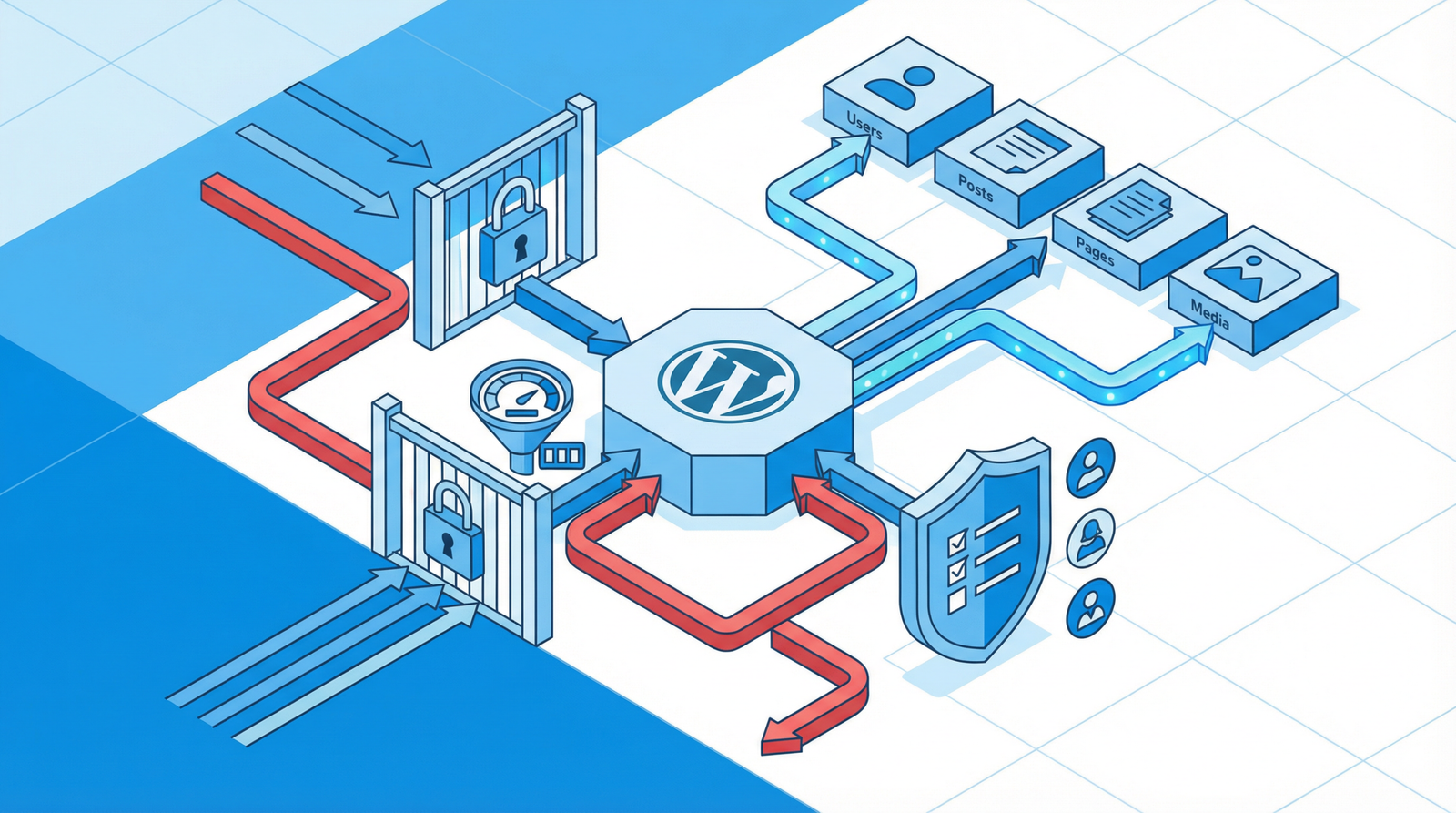
3. WordPress Edge Optimization (Updated for Modern CDNs)
For WordPress sites, integrating with modern CDN edge features is crucial. While plugins can help, direct configuration often yields the best results:
// Add edge cache headers for non-admin, non-logged-in users
function add_edge_cache_headers() {
    if (!is_admin() && !is_user_logged_in()) {
        // Cache static pages for 1 hour at edge, respecting CDN's s-maxage
        header('Cache-Control: public, max-age=3600, s-maxage=3600');
    }

    // Add edge cache tags for smart invalidation (e.g., for Cloudflare Cache Tags)
    if (is_single()) {
        header('Cache-Tag: post-' . get_the_ID() . ', all-posts'); // Tagging for specific post and all posts
    } elseif (is_category()) {
        header('Cache-Tag: category-' . get_queried_object_id() . ', all-categories'); // Tagging for specific category and all categories
    } elseif (is_front_page() || is_home()) {
        header('Cache-Tag: homepage'); // Tagging for homepage
    }
}
add_action('send_headers', 'add_edge_cache_headers');
This snippet provides more granular cache tagging, allowing for more efficient cache invalidation when content changes, a key feature for dynamic WordPress sites.
Leading CDN Providers with Advanced Edge Capabilities (2025/2026 Focus):
Cloudflare: Industry leader with Workers, image optimization, advanced edge caching, and comprehensive security.
Vercel: Known for its seamless integration with frontend frameworks and powerful Edge Functions, ideal for Jamstack architectures.
Netlify: Offers Edge Functions and a robust CDN, perfect for modern web projects and static site generation.
BunnyCDN: Provides excellent performance with features like Bunny Edge Rules and Optimizer for image processing.
AWS CloudFront: Integrates with Lambda@Edge for serverless functions at the edge, offering deep customization for AWS users.
Conclusion: The Edge is Your Performance Frontier
Ignoring the full capabilities of edge computing and modern CDNs is no longer an option for websites aiming for peak performance and optimal user experience. By embracing serverless edge functions, leveraging advanced CDN features, and intelligently optimizing your content delivery, you can significantly reduce latency, improve TTFB, enhance API responsiveness, and deliver a blazing-fast experience to users across the globe. The future of web performance is at the edge – are you ready to harness its power?